
Daily Crypto Surf Report — September 22, 2026
BTC -0.3% to $86,308. OB surf 3–4 ft. Daily crypto + surf snapshot for Sep 22, 2026.
 ₿
619-268-1889
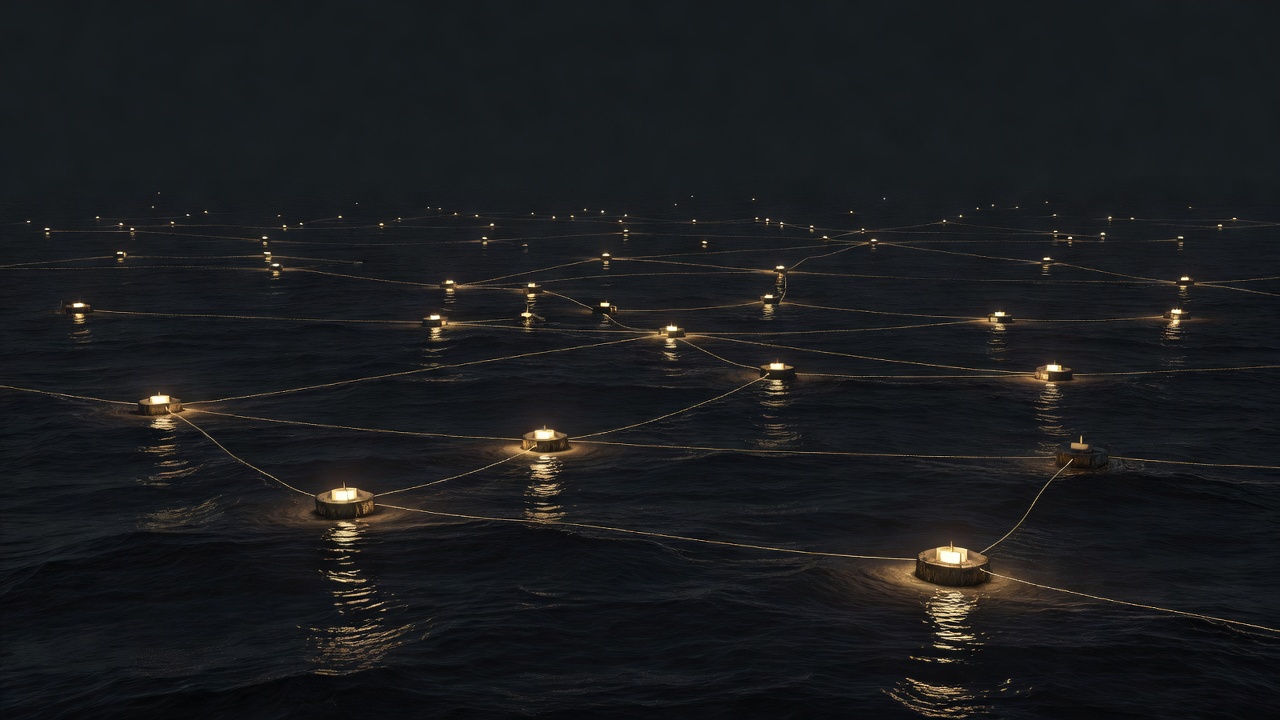
Every crypto cycle has produced the same lesson at least once: the exchange that holds everyone’s coins is also the single point that can freeze, fail, or simply disappear. Distributing custody isn’t paranoia, it’s basic risk math. Concentration risk doesn’t go away because the concentrator is big and reputable — big and reputable is what every failed custodian looked like the day before it failed.
AI compute is walking the same path. Right now most builders route everything through one provider’s API: one region, one rate limit policy, one outage away from every downstream product going dark at once. It’s convenient right up until it’s the whole story.
Distributed, sovereign compute spreads that risk the way a diversified custody setup spreads custody risk — multiple venues, no single point that can take the whole system down. It’s the fourth leg of the SSHL practice, and arguably the one builders underestimate most, because the failure mode is invisible right up until the day it isn’t.
This isn’t about ideology. A distributed setup costs a little more coordination up front and pays it back the first time a single-provider outage would have taken you down instead. That’s the same trade every crypto-native person already makes when they split holdings across cold storage and more than one venue. We went deep on the architecture logic in Distributed by Design, and the sovereignty case underneath it in Sovereignty Starts With Your Keys. Neither piece asks you to take it on faith — both walk through the actual mechanics of what spreading compute across venues buys you.
If you’re a maker or a small team, you don’t need a multi-cloud team to get the benefit — you need the architecture decision made early, before the single provider is load-bearing for your whole product.
The good news is that this doesn’t require rebuilding your whole stack overnight. Start with the workload that would hurt most if it went dark for a day, and make sure it has a second place to run. Resilience is rarely an all-or-nothing decision — it’s a series of small hedges that add up the same way diversified custody does.
Want a second opinion on where your AI stack has a single point of failure? Bring it to /build.
BTC -0.3% to $86,308. OB surf 3–4 ft. Daily crypto + surf snapshot for Sep 22, 2026.
BTC +4.7% to $85,018. OB surf 3–4 ft. Daily crypto + surf snapshot for Sep 21, 2026.
BTC -0.9% to $80,477. OB surf 3–4 ft. Daily crypto + surf snapshot for Sep 20, 2026.